
Episodio 291
Escucha el episodio
Escucha una vez para captar la idea principal. Después usa la transcripción y repite en voz alta las frases útiles.
Descarga y estudia
Recursos del episodio
Descarga un archivo o continúa con la transcripción.
Orden recomendado: escucha una vez, lee mientras escuchas y vuelve a escuchar sin el texto.
Lección completa
Lee la transcripción
Sigue el texto mientras escuchas y después repite en voz alta las frases útiles.
Hi! I'm Georgiana, and I'm back with a new episode. I'm here to help you speak English fluently. And what do you need to speak fluently? You need to LISTEN, LISTEN, LISTEN, and LISTEN. 🙂
Ok, let's start!
In our previous episode, we talked about Diogenes syndrome. It's when people collect too many things.
Today, I will talk about practically the opposite: minimalism.
A few years ago, this lifestyle became popular.
The concept of minimalism is about removing unnecessary things and focusing on what's important. Seems logical, right? Well... Sometimes, attempting to live a minimalist lifestyle can actually be more stressful than just accepting a little bit of clutter. Finally, it's about finding a balance that works for you.
Here are some principles of minimalism:
Simplicity: Enjoy the simple and the necessary.
- Utility: Have only things you use that are useful to you.
- Quality: Prefer fewer things, but of better quality.
- Consciousness: Think and choose what really matters.
Order: A clean, organized space helps you think and live better.
Peace: Seek tranquility in your environment.
Autonomy: Live with the essentials and take care of your resources.
And last but not least...
- Experiences: You value moments and friendships more than material possessions.
Marie Kondo is famous in the world of keeping things tidy. She's from Japan and has taught many of us to ask if our belongings make us happy. She's had a big influence, and for some time, we all followed her advice on folding clothes neatly and getting rid of things we don't need.
But now, she mentioned that after having three kids she can't be as strict anymore. If Marie Kondo has found a balance, we don't have to be perfect either.
A while ago, I was inspired by ideas of living simply, so I tried to make my life more minimalist. I planned it well in my mind, but it was hard to do. To be honest, it lasted only two weeks. 🙂 Now, I try to be sensible. I keep only what I need, and I don't worry if things are a bit messy.
So, I believe it's not about keeping your space perfectly clean and tidy all the time. It's more about creating a home where you feel cozy and calm. Sometimes, things are a little messy, like the shoes not being in the right place. But it’s okay!
I hope you found this episode interesting, and that it helped you practice your English a bit too.
What do you think about minimalism? Is it just a fad, or... Does it have value?
Now, let’s practice.
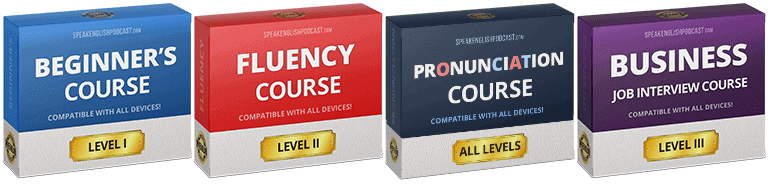
¿Quieres seguir practicando inglés? Continúa con un curso de audio completo.
MEJORA TU INGLÉS HABLADO
Mini-Story: practica hablando
Responde a las preguntas en voz alta con respuestas breves y rápidas. Repite la Mini-Story varias veces para mejorar tu expresión y comprensión en inglés.
Leo and Mary were a happy married couple but had a problem.
Were Leo and Mary just friends?
No, they were not just friends. They were a happily married couple, but they had a problem.
What did Leo and Mary have?
A problem. Despite being a happy couple, they had a problem.
Leo loved to accumulate all kinds of stuff in the house.
Did Leo love to have an empty house?
No. He didn't love that. He loved to accumulate all kinds of things in the house.
What did Leo love to do at home?
Accumulate things. He loved accumulating all kinds of things in the house.
Did Leo or Mary love that?
Leo. He loved that. Not Mary.
Mary was a minimalist and liked the house without many objects.
Was Mary a collector?
No, Mary was not a collector. She was a minimalist and liked the house, without many objects.
Did Mary like the house empty or full?
Empty. She liked it empty. She was a minimalist and liked it that way, without many objects.
How did Mary like the house?
She liked the house without many objects.
Leo and Mary's house was divided into one part full of things and the other almost empty.
How was Leo and Mary's house divided?
It was divided in two. One part was full of stuff, and the other one was almost empty.
Was one part of the house full of water?
No, it wasn't full of water. One part was full of stuff, and the other one was almost empty.
The swimming pool was full of water, but that's not important to the story.
One day, Leo said, "Maybe I could get rid of some objects."
Did Leo say he would get rid of all his objects?
No, he didn't say that. He said that maybe he could get rid of some objects.
Did Leo want to buy more items?
No. He was considering getting rid of some objects.
Mary replied, "Maybe I could have some more objects."
Did Mary want to get rid of more objects?
No. Mary said, "Maybe I could have some more objects.
Was Mary happy to have the house almost empty?
Yes, but she was considering being less strict. She was becoming more open to change.
Between smiles, Leo and Mary agreed to compromise on their positions.
Did Leo and Mary agree to fight about their differences?
No, they did not agree to fight. They agreed to compromise on their positions between smiles.
Did they agree to do that in tears?
No, they didn't agree to that in tears. They agreed between smiles.
Were they peeling onions, and that's why they were laughing and crying at the same time?
No. No. Between smiles, they agreed to give up on their positions. No onions... No swimming pools.
They now live in a house that is not empty but not full of objects either.
Do they now live in a house completely full of objects?
No. They now live in a house that is not empty but not full of objects either.
How their house now?
It is a balanced house, neither empty nor full of objects. It is more practical.
Thanks for listening, and I’ll see you in the next episode.
Repaso
Vocabulario
Repasa las palabras y expresiones más útiles antes de volver a escuchar.
minimalism
un estilo de vida centrado en tener menos posesiones innecesarias.
simplicity
la cualidad de no ser complicado.
utility
utilidad para un propósito práctico.
clutter
objetos desordenados que llenan un espacio.
belongings
las cosas que posee una persona.
tidy
ordenado y bien organizado.
essentials
las cosas que son absolutamente necesarias.
fad
una moda o entusiasmo de corta duración.
¿Quieres seguir practicando inglés? Continúa con un curso de audio completo.