
Episodio 302
Escucha el episodio
Escucha una vez para captar la idea principal. Después usa la transcripción y repite en voz alta las frases útiles.
Descarga y estudia
Recursos del episodio
Descarga un archivo o continúa con la transcripción.
Orden recomendado: escucha una vez, lee mientras escuchas y vuelve a escuchar sin el texto.
Lección completa
Lee la transcripción
Sigue el texto mientras escuchas y después repite en voz alta las frases útiles.
Hi! I'm Georgiana, and I'm back with a new episode. I'm here to help you speak English fluently.
Okay, let's start!
I'm on a seafood diet. I see food, and I eat it!
This joke is a play on words.
Usually, when people say they're on a diet, they try to eat less or eat specific kinds of food to become healthier.
But in this joke, the person says they're on a 'seafood diet,' which sounds like they only eat seafood.
However, the punchline reveals the joke: 'I see food, and I eat it!' This means they eat any food they see, not just seafood.
So, it's a clever way of saying they love to eat all kinds of food, and it's a play on the words 'seafood' and 'see food.
I'm reading a book on anti-gravity. It's impossible to put down!
Usually, when people say a book is 'impossible to put down,' they mean that it's so interesting or exciting that you can't stop reading it, as if the book has a strong pull on you.
So, in this joke, the person is reading this book about 'anti-gravity,' which is like the opposite of gravity that makes stuff fall down. So, when they say, 'It's impossible to put down,' they really mean it. Because with anti-gravity, the book won't drop. You can't physically set it down.
Why did the math book look sad? Because it had too many problems.
This joke is about a sad math book. Books can't have feelings. It's "sad" because it has "too many problems," which means many math questions. It's funny because it makes us imagine the book can feel sad, like a person, but it refers to the math questions.
I used to play piano by ear, but now I use my hands.
This joke is about how someone used to play the piano without using their hands, just by listening to the music (playing by ear).
When someone says they "play by ear," it means they can play music just by listening to it and don't need sheet music or notes to follow. It doesn't mean they are not using their hands to play.
But now, they use their hands like most people do. It's funny because playing the piano without using your hands is unusual.
How do you organize a space party? You "planet"!
This joke is a play on words. Usually, when we talk about organizing a party, we mean arranging and planning it.
But this joke plays with the word 'planet,' which sounds like 'plan it.' So, it's saying that to organize a space party, you should 'planet,' meaning you should plan it.
It's funny because it uses two meanings of the word 'planet' to create humor.
Now, let’s practice.
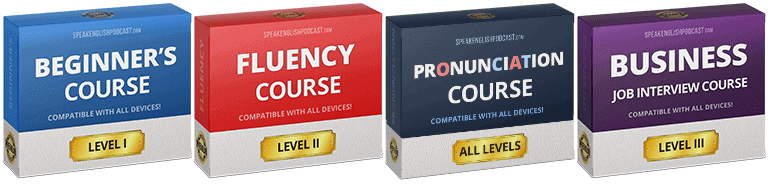
¿Quieres seguir practicando inglés? Continúa con un curso de audio completo.
MEJORA TU INGLÉS HABLADO
Mini-Story: practica hablando
Responde a las preguntas en voz alta con respuestas breves y rápidas. Repite la Mini-Story varias veces para mejorar tu expresión y comprensión en inglés.
Joe was the typical family man who liked to tell 'dad jokes,' and his teenage daughter, Lisa hated it.
Did Lisa like to tell 'daughter' jokes?
No, no. Lisa didn't like that. In fact, the expression is 'dad jokes'. It was Joe who liked telling jokes.
Did Lisa love her dad's jokes?
No. She didn't love his jokes. She hated them! I suppose that teenagers don't really like their parent's sense of humor.
Who told jokes? The dog?
No, no. Not the dog. Jim. Lisa's dad, told jokes. Dad jokes.
One day, Joe and Lisa took the elevator, but it stopped working while they were between two floors.
Did Joe and Lisa take the bus?
No, no. They didn't take the bus, but the elevator.
What happened to the elevator? Did it stop working?
Yes. The elevator stopped working.
Who was between two floors?
Joe and Lisa. They were in the elevator, between two floors.
While waiting for help, Joe started telling jokes, and Lisa rolled her eyes.
Did Joe start telling stories about when he was younger?
No, he didn't. That's not what happened. Joe started telling jokes.
Was Lisa sad because of that?
No. Lisa was not sad. She rolled her eyes. That means she was annoyed, not sad.
When did that happen?
While waiting for help. While they were waiting for help, that happened.
Lisa didn't smile or laugh. Instead, she listened to the jokes looking bored.
Did Lisa cry because the jokes were very bad?
No, no. She didn't cry. She listened to the jokes looking bored. She did not appreciate her dad's jokes.
Did Lisa have fun?
No. She didn't have fun. She was bored.
Was Joe bored?
No, no. Joe wasn't bored. His teenage daughter Lisa was bored.
But when joke number 37 came along, Lisa couldn't resist and let out a small giggle.
What joke came along? Joke 2037?
No, not joke 2037. Joke number 37 came along.
Did someone come along to help?
No. Joke 37 came along and made Lisa giggle.
Did Lisa google something?
No, no. Lisa didn't google something. She giggled, she laughed.
Could Lisa resist when joke 37 came along?
No. Lisa couldn't resist and let out a small giggle.
Finally, the firefighters managed to open the elevator doors and found a father and his daughter laughing hysterically.
Did the firefighters listen to Joe's jokes and start laughing, too?
No, no. They didn't listen to any jokes. Their job was to open the elevator doors.
Who managed to open the elevator doors?
The firefighters. They had to open the elevator doors to rescue Jim and Lisa.
What did the firefighters find?
They found a father and his daughter laughing hysterically!
Were they just giggling?
No, no. They were not just giggling. They were laughing hysterically.
It seems like after so many jokes, Lisa finally understood her dad's sense of humor.
Well, we're finished with our short practice.
Answering many simple questions can improve your speaking, just like talking in real life.
Thanks for listening, and I’ll see you in the next episode.
Repaso
Vocabulario
Repasa las palabras y expresiones más útiles antes de volver a escuchar.
seafood diet
un chiste basado en el parecido entre los sonidos de seafood y see food.
anti-gravity
una fuerza o idea que actúa contra la gravedad.
put a book down
dejar de leer y apartar un libro.
problem
un ejercicio de matemáticas; también, una situación difícil.
play by ear
tocar música sin leer una partitura.
planet / plan it
un juego de palabras basado en dos expresiones que suenan de forma parecida.
space party
una fiesta con temática del espacio exterior.
punchline
la parte de un chiste que contiene el efecto humorístico.
¿Quieres seguir practicando inglés? Continúa con un curso de audio completo.