
Episodio 342
Escucha el episodio
Escucha una vez para captar la idea principal. Después usa la transcripción y repite en voz alta las frases útiles.
Descarga y estudia
Recursos del episodio
Descarga un archivo o continúa con la transcripción.
Orden recomendado: escucha una vez, lee mientras escuchas y vuelve a escuchar sin el texto.
Lección completa
Lee la transcripción
Sigue el texto mientras escuchas y después repite en voz alta las frases útiles.
Hi! I’m Georgiana, and I’m back with a new episode of the Speak English Now podcast—the podcast that helps you speak English fluently, with no grammar and no textbooks.
Great! Let's start!
Why Do Eye Contact and Tone Matter?
When you speak, people don’t only listen to your words.
They also look at your face and hear your voice.
Think about this:
If you speak with a soft voice and look at the floor, people may think you are unsure.
If you speak clearly and look at the person, they will feel you are confident.
Being assertive is not just about words—it’s also about how you say those words.
👀 Let’s Start with Eye Contact
Eye contact means looking at the person you are talking to. You don’t need to stare. Just look at their face naturally.
If you avoid eye contact, people may think you are:
Nervous
Not telling the truth
Lacking confidence
But if you use natural eye contact, they feel that:
You are honest
You are confident
You respect them
✅ Tip: When you speak English, look up. Don’t look down at your shoes or the table. This small change will help you sound more confident.
Now Let’s Talk About Tone of Voice
Your tone of voice means how you speak:
Are you speaking loudly or softly?
Is your voice going up at the end of every sentence?
Do you speak quickly or slowly?
To be assertive, your tone should be:
Clear
Calm
Steady
Let’s look at an example:
❌ "I think... maybe... I could try...?"
(This sounds weak. The person doesn’t sound confident.)
✅ "I can try that. Let’s see how it works."
(This sounds assertive. Clear. Calm. Confident.)
Avoid ending statements like questions. For example:
❌ "I’m from Brazil?"
✅ "I’m from Brazil."
When you raise your voice at the end, it sounds like you’re asking—even when you’re not. Speak with a downward tone at the end of a sentence to show certainty.
Another example:
❌ "I work in an office?"
✅ "I work in an office."
(You sound confident and clear with a downward tone.)
Giving a Clear Answer
❌ "I think it’s a good idea?"
✅ "I think it’s a good idea."
Quick Recap: How to Use Eye Contact and Tone to Be Assertive
Look at the person you’re talking to.
Speak slowly and clearly.
Lower your voice at the end of a sentence.
Practice in front of a mirror or with a friend.
These simple techniques will make you sound more confident and natural when you speak English.
Now, let’s practice.
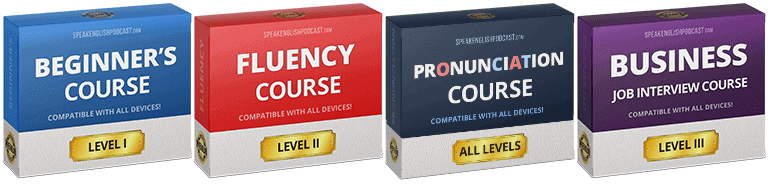
¿Quieres seguir practicando inglés? Continúa con un curso de audio completo.
GRAMÁTICA FÁCIL
Historia POV: gramática en contexto
Lee la misma historia desde distintos puntos de vista y observa cómo cambia la gramática de forma natural.
| 01 |
First version Past Tense - Third Person |
Now, let’s practice with a Point of View Story.
I will tell you the same story, but in different points of view. This will help you practice grammar in a natural way.
Sophia worked in a small office in Madrid. One day, her manager asked her to give a short presentation in English.
She felt nervous. Sophia had studied English for many years, but speaking in front of many people made her uncomfortable. She looked at her notes and whispered when she practiced. She avoided looking at her coworkers.
The day of the presentation arrived. Sophia stood in front of her team, looked down at her paper, and started to speak. Her voice was low, and she didn’t look at anyone.
After a few minutes, her manager interrupted kindly and said, “Sophia, we want to hear you. Look at us and speak with a bit more energy.”
Sophia took a deep breath. She looked up and made eye contact with one person, then another. She raised her voice just a little and tried to speak clearly.
To her surprise, people started to nod and smile. She felt more confident. The more eye contact she made, the easier it became. Her voice became steady, and she even smiled.
When she finished, her team clapped. Her manager said, “Well done! Your message became much clearer when you looked at us and spoke with confidence.”
That day, Sophia learned something important.
Words are not enough. The way you say them—your tone of voice—and how you connect with people—your eye contact—can change everything.
From that moment on, Sophia practiced looking at people when she spoke and using a calm, steady voice. Her confidence grew with each conversation.
| 02 |
Second version First Person - Sophia's Viewpoint |
Hi! I'm Sophia. I work in a small office in Madrid. One day, my manager asked me to give a short presentation in English.
I felt nervous. I had studied English for many years, but speaking in front of many people made me uncomfortable. I looked at my notes and whispered when I practiced. I avoided looking at my coworkers.
Then the day of the presentation came. I stood in front of my team, looked down at my paper, and started to speak. My voice was low, and I didn’t look at anyone.
After a few minutes, my manager interrupted me kindly and said, “Sophia, we want to hear you. Look at us and speak with a bit more energy.”
I took a deep breath. I looked up and made eye contact with one person, then another. I raised my voice just a little and tried to speak clearly.
To my surprise, people started to nod and smile. I felt more confident. The more eye contact I made, the easier it became. My voice became steady, and I even smiled.
When I finished, my team clapped. My manager said, “Well done! Your message became much clearer when you looked at us and spoke with confidence.”
That day, I learned something important.
Words are not enough. The way I say them—my tone of voice—and how I connect with people—my eye contact—can change everything.
From that moment on, I practiced looking at people when I spoke and using a calm, steady voice. My confidence grew with each conversation.
If you want to practice more, visit my
Thanks for listening, and I’ll see you in the next episode.
Repaso
Vocabulario
Repasa las palabras y expresiones más útiles antes de volver a escuchar.
eye contact
mirar directamente a los ojos de otra persona mientras te comunicas.
tone of voice
el sonido y la cualidad emocional de la forma en que alguien habla.
whisper
hablar muy bajo.
steady voice
una forma de hablar tranquila y controlada.
nod
mover la cabeza para mostrar acuerdo o comprensión.
presentation
una exposición que se realiza para explicar información a un grupo.
connect with
crear una sensación de conexión y comprensión con otra persona.
body language
comunicación mediante la postura, los movimientos y las expresiones faciales.
¿Quieres seguir practicando inglés? Continúa con un curso de audio completo.

0 Comentarios