
Episodio 337
Escucha el episodio
Escucha una vez para captar la idea principal. Después usa la transcripción y repite en voz alta las frases útiles.
Descarga y estudia
Recursos del episodio
Descarga un archivo o continúa con la transcripción.
Orden recomendado: escucha una vez, lee mientras escuchas y vuelve a escuchar sin el texto.
Lección completa
Lee la transcripción
Sigue el texto mientras escuchas y después repite en voz alta las frases útiles.
Hi! I'm Georgiana, and I'm back with a new episode. I'm here to help you speak English more easily and with confidence.
Great! Let's start!
If you’re learning on your own, having a simple, clear plan is what separates success from frustration.
And the best part?
Let me explain how it works and how you can create your own daily habit—even starting today.
#1 Without a Plan, You’ll Drift
Most learners don’t fail because they’re lazy.
They fail because they don’t have a plan.
We all live busy lives. We try to survive one day at a time.
And without a clear structure, English becomes “something I’ll do later.”
But fluency doesn’t happen later—it happens through consistent, focused practice.
That’s why you need a simple plan.
When you know exactly what to do, you can focus—and make real progress.
#2: The Foundation of Your Plan
1 Hour of Listening + Speaking Daily
Here’s the habit I want you to build:
Listen to English for one hour every day
Practice speaking using my mini-stories
No grammar rules. No textbooks. Just natural learning.
This is the method I’ve developed—and it works.
What to listen to
How to practice
When to speak
And how to repeat effectively
You don’t need to guess. You just follow the plan—and speak better every week.
Part 3: Build Your 20-Day Challenge
Let’s take it one step further.
I suggest creating a 20-day challenge to build momentum. It’s a simple structure:
✅ Listen 1 hour a day
✅ Practice 1 mini-story
✅ Track your progress
✅ Give yourself small rewards
Twenty days is enough to build a habit. Enough to feel real change.
It’s how you move from “I’m trying” to “I’m doing it.”
And if you follow my method—you’re not doing it alone. You’re following a proven system.
🎁 Part 4: Reward Yourself
Completion Feels Good!
Here’s something you might not know:
Your brain loves completing tasks.
When you check something off your list, you feel good. You feel capable. You want to keep going.
That’s why rewarding yourself is so important.
Give yourself small, fun prizes for staying on track:
A treat
A favorite show
A relaxing break
A little gift
These aren’t silly. They’re smart.
They make your brain associate English with success and satisfaction.
💬 Part 5: This Is a Lifetime Journey. Make It Enjoyable!
Fluency doesn’t come in a week. Or even a month.
It’s a lifetime journey.
So, you need a method that you can stick with—one that’s simple, enjoyable, and realistic.
They’re designed for independent learners like you—people who want structure without pressure.
And remember: You don’t have to be perfect. You just have to be consistent.
🔁 Review
Let’s review everything we’ve learned today:
You need a simple plan to make real progress
Listen to English one hour a day
Practice speaking with my mini-stories
Try a 20-day challenge to build the habit
Reward yourself—your brain loves that feeling of completion
Remember: English is a lifetime journey, not a race
You’ll find different levels and programs—each one designed to help you speak English fluently.
Now, let’s practice.
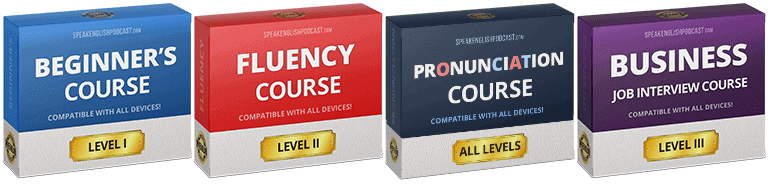
¿Quieres seguir practicando inglés? Continúa con un curso de audio completo.
MEJORA TU INGLÉS HABLADO
Mini-Story: practica hablando
Responde a las preguntas en voz alta con respuestas breves y rápidas. Repite la Mini-Story varias veces para mejorar tu expresión y comprensión en inglés.
Ready? Let’s go!
Emma was learning English by herself and often felt confused about what to do next.
Who was learning English?
Emma. She was learning English.
Was Emma studying in a group?
No, no. Emma wasn’t studying in a group. She was studying by herself.
Did she feel confident or confused?
Confused. Emma often felt confused about what to do next.
One day, she found a podcast that gave her a clear idea: “Listen for one hour a day and practice with mini-stories.”
What did Emma find?
A podcast. Emma found a podcast.
Did the podcast recommend studying grammar?
No. It recommended listening for one hour a day and practicing with mini-stories.
Did the podcast give her a clear idea?
Yes. It gave her a clear, simple method.
Did Emma purchase a house?
Did the course include a step-by-step guide?
Yes. It included a clear step-by-step guide.
Why did Emma buy the course? Because she was bored?
No. She bought the course because she liked the method and wanted to follow a real plan.
She created a 20-day challenge: each day, she listened to English for one hour and practiced speaking with a mini-story from the course.
What kind of challenge did Emma create? A 200-day challenge?
No. She created a 20-day challenge.
What did she do each day? Did she study grammar?
No. She didn’t study grammar. She listened to English for one hour and practiced speaking with a mini-story.
Were the mini-stories included in the course?
To stay motivated, she promised herself small rewards: after five days, a coffee; after ten, a book; after twenty, her favorite dinner.
Did Emma punish herself?
No, no. Emma didn’t punish herself. She rewarded herself. She gave herself small rewards.
What did she do after five days? Did she go on a trip?
No. She didn’t go on a trip. She gave herself small rewards. After five days, she got herself a nice coffee.
What was her reward after ten days? A new book?
Yes. After ten days, she bought a new book.
And after twenty days?
After twenty days she celebrated with her favorite dinner.
Each day she completed gave her a strong sense of achievement, and by the end of 20 days, she felt more fluent and proud of herself.
Did Emma feel discouraged?
Proud. She felt proud of herself. She had a strong sense of achievement.
What helped her feel more fluent?
She became more fluent by practicing speaking with a mini-story every day.
Was she proud because she finished the challenge?
Yes. She felt proud because she followed the plan and finished it.
And the best part? She didn’t stop after 20 days. She started a new challenge—with more confidence than ever.
Did Emma quit after 20 days?
No. She kept going. She didn’t quit after 20 days.
Did she feel stronger and more motivated?
Yes. Emma felt more confident and motivated than ever.
What helped her the most?
Following a clear plan with listening, speaking, and small rewards.
That’s the end of today’s mini-story!
You can do exactly what Emma did: follow a real plan, practice every day, reward yourself, and enjoy the process. Want my step-by-step guide to speak English fluently?
Bye-bye!
Thanks for listening, and I’ll see you in the next episode.
Repaso
Vocabulario
Repasa las palabras y expresiones más útiles antes de volver a escuchar.
drift
avanzar sin una dirección o un plan claros.
foundation
la base sobre la que se construye algo.
consistent practice
práctica regular mantenida a lo largo del tiempo.
momentum
un progreso que cada vez resulta más fácil mantener.
challenge
una meta o actividad que requiere esfuerzo.
structure
un plan o una organización ordenados.
focused
centrado en un propósito claro.
follow through
continuar haciendo algo hasta completarlo.
¿Quieres seguir practicando inglés? Continúa con un curso de audio completo.