
Episodio 191
Escucha el episodio
Escucha una vez para captar la idea principal. Después utiliza la transcripción y repite en voz alta las frases útiles.
Descarga y estudia
Recursos del episodio
Descarga un archivo o continúa con la transcripción.
Orden recomendado: escucha una vez, lee mientras escuchas y vuelve a escuchar sin el texto.
Lección completa
Lee la transcripción
Sigue el texto mientras escuchas y después repite en voz alta las frases útiles.
Hola a todos. Soy Georgiana, tu profesora de inglés. Mi misión es ayudarte a hablar inglés con fluidez.
Hoy continuaremos descubriendo más super short scary stories, historias de miedo supercortas.
Después practicaremos la fluidez con una mini-historia sencilla y efectiva.
Puedes consultar la transcripción de este episodio en ProfesoraIngles.com.
La semana pasada vimos varias historias tan breves que muchas cabían en una sola línea.
Por ejemplo:
“We know who you are and where you live.”
Hoy veremos algunas más. Como sé que eres valiente, seguro que podrás bear it, soportarlo. Además, comentaré cada frase para que aprendas vocabulario y expresiones en contexto.
Primera historia:
“Your bank called you.”
Uf. Cada vez que llama un banco, uno se pregunta qué querrán. Tal vez ofrecer una mortgage, hipoteca, un crédito, un seguro o informar de algún problema.
Lo que está claro es que una llamada inesperada del banco puede despertar cierta inquietud.
Otra:
“Your mother-in-law invites you to Christmas dinner.”
Las pobres mothers-in-law, suegras, tienen una fama bastante injusta. Existe el estereotipo de que son meddling, entrometidas, y se meten demasiado en la vida de los demás.
Pero, como todos los estereotipos, no hay que tomárselo demasiado en serio.
La siguiente:
“I saw a mouse in the office.”
Ver un ratón en la oficina no suena muy bien. Aunque siempre podemos pensar que se trata de un computer mouse, un ratón de ordenador. En ese caso la historia deja de dar miedo.
Otra:
“There is a problem.”
Sí, esta frase suele anunciar una unpleasant situation, una situación desagradable. Lo peor es que todavía no sabes cuál es el problema.
Y esta:
“Did you hear that?”
Dependiendo del contexto, puede ser bastante inquietante. Si estás solo en casa de noche y alguien susurra esa frase, probablemente prestarás mucha atención.
La última historia:
“I don’t speak English.”
Eso sí puede convertirse en un problema cuando necesitas comunicar algo importante con urgencia.
Imagina que estás en un restaurante, quieres pedir algo sencillo y no sabes cómo expresarlo. Precisamente por eso practicamos: para disponer cada vez de más recursos automáticos.
Lo dejamos aquí por ahora.
Continuemos con una mini-historia.
Ahora, practiquemos.
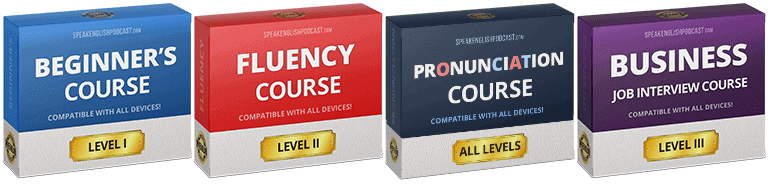
¿Quieres seguir practicando inglés? Continúa con un curso de audio completo.
MEJORA TU EXPRESIÓN ORAL
Mini-historia: practica tu inglés hablado
Responde a las preguntas en voz alta con respuestas cortas y rápidas. Repite la mini-historia varias veces para mejorar tu expresión oral y tu comprensión.
What's a mini-story?
A mini-story is very simple. I give you information using phrases, and then I ask you questions.
After each question, there will be some seconds of silence: it's your turn to answer the question!
Just try to give an easy and short answer. Not a complex one.
After your answer, I'll give you the correct answer.
And just like that, I'll tell a story with questions and answers.
Are you ready?
In a faraway kingdom lived Tom, who was not afraid of anything.
Did Tom live in a faraway kingdom?
Yes. Tom lived in a faraway kingdom.
Who lived in a kingdom?
Tom, Tom lived in a kingdom and was not afraid.
Who wasn't afraid?
Tom. Tom was not afraid.
In that kingdom, the king had a daughter, a gorgeous daughter.
Did the king have a son?
No. The king didn't have a son. He had a daughter, and she was gorgeous.
Whoever got to spend three nights in an enchanted castle would marry the princess.
Whoever got to spend three nights in a castle would marry the king?
No, no. Not the king.
Whoever got to spend three nights in a castle would marry the princess.
Who would marry the princess?
Whoever managed to spend three nights in a castle .
What would be the necessary condition to marry the princess?
To spend three nights in a castle.
After passing the test, Tom married the king's daughter.
Did Tom pass the test, or did he fail?
Tom passed the test. He succeeded. He didn't fail.
Did Tom marry the king's daughter?
Yes, he married the king's daughter. He married the princess.
Who did Tom marry? The king?
No. No. Not the king. Tom married the king's daughter. He married the princess.
One day Tom saw his wife wearing a green cucumber mask and was terrified.
Did Tom see a terrible monster?
No, Tom did not see a terrible monster. He saw his wife wearing a green cucumber mask.
What did he see?
A green cucumber mask.
Was Tom amused? Was he surprised? Or was he perhaps terrified?
He was terrified. He was terrified when he saw the green cucumber face mask.
Great! We're finished with our short practice.
Answering many simple questions can improve your speaking, just like talking in real life.
Thanks for listening, and I’ll see you in the next episode.
Repaso
Vocabulario
Repasa las palabras y expresiones más útiles antes de volver a escuchar.
mortgage
préstamo utilizado para comprar una vivienda.
mother-in-law
la madre de tu cónyuge.
meddling
entrometiéndose en los asuntos de otras personas.
computer mouse
dispositivo utilizado para controlar el puntero de un ordenador.
unpleasant situation
situación difícil o incómoda.
bear it
soportar o tolerar algo difícil.
cucumber
verdura alargada y verde; pepino.
scary story
historia o frase muy breve pensada para asustar.
¿Quieres seguir practicando inglés? Continúa con un curso de audio completo.

0 Comentarios