
Episodio 181
Escucha el episodio
Escucha una vez para captar la idea principal. Después utiliza la transcripción y repite en voz alta las frases útiles.
Descarga y estudia
Recursos del episodio
Descarga un archivo o continúa con la transcripción.
Orden recomendado: escucha una vez, lee mientras escuchas y vuelve a escuchar sin el texto.
Lección completa
Lee la transcripción
Sigue el texto mientras escuchas y después repite en voz alta las frases útiles.
Hola a todos. Soy Georgiana, tu profesora de inglés. Mi misión es ayudarte a hablar inglés con fluidez.
Hoy quiero hablar de la importancia de moverte mientras estudias inglés.
¡Empecemos!
Imagina a una persona que está aprendiendo inglés y se prepara para estudiar una lección nueva.
¿Qué escena te viene a la cabeza? Quizá está sentada en casa o en una biblioteca silenciosa, con un libro abierto, un diccionario y un cuaderno. Tal vez lleva horas casi motionless, inmóvil, intentando memorizar el contenido.
Esa es, al menos, la imagen tradicional que suele venirnos a la mente cuando pensamos en estudiar un idioma.
Ahora vamos a visualize una escena distinta. Imagina a alguien caminando. Todo el cuerpo está en movimiento: los pies, las piernas, los brazos y la respiración. El cerebro recibe más oxígeno y resulta más difícil sentirse completamente lethargic, apático o sin energía.
Para mí, este segundo estado puede ser excelente para aprender. El cerebro está más despierto y receptivo.
Además, no necesitas cargar con libros, cuadernos, diccionarios ni lápices mientras caminas. No sería nada práctico.
Hay una forma mucho más cómoda de aprovechar ese tiempo: escuchar audio en inglés.
Puedes mejorar muchísimo escuchando materiales interesantes mientras te mueves.
De hecho, las mini-historias están diseñadas para que puedas simular una conversación en inglés allí donde estés y aprovechar cualquier momento de spare time, tiempo libre.
Así combinas práctica de inglés y actividad física. No está nada mal.
¿Todavía no te convence? A lo largo de la historia, muchas personas conocidas han utilizado los paseos para pensar, aprender o crear.
Aristóteles, el filósofo griego, enseñaba a sus alumnos mientras paseaba.
Sus discípulos fueron conocidos como peripatéticos, un término relacionado precisamente con caminar y pasear.
Charles Dickens recorría Londres durante largas caminatas. Esos paseos también le ayudaban a relieve anxiety, aliviar la ansiedad.
Beethoven, el célebre compositor, disfrutaba de largas caminatas sin importar demasiado el tiempo que hiciera.
Esos paseos eran importantes para su creatividad y solía llevar consigo papel y algo con lo que anotar ideas musicales.
Sigmund Freud también daba largos paseos y, según se cuenta, en ocasiones conversaba con pacientes mientras caminaba.
Nietzsche consideraba caminar una condición importante para escribir. Solía salir con su cuaderno y dedicar bastante tiempo al paseo.
Einstein recurría a largas caminatas para pensar en problemas complejos.
Steve Jobs también era conocido por sus reuniones caminando. Utilizaba esos paseos para hacer ejercicio, pensar, resolver problemas y hablar con otras personas con menos distracciones.
La idea no es que caminar sea una fórmula mágica, sino que puedes aprovechar el movimiento y el tiempo cotidiano para escuchar y practicar inglés.
Así que, si te resulta cómodo y seguro, prueba a escuchar inglés mientras caminas o haces ejercicio.
Ahora, practiquemos.
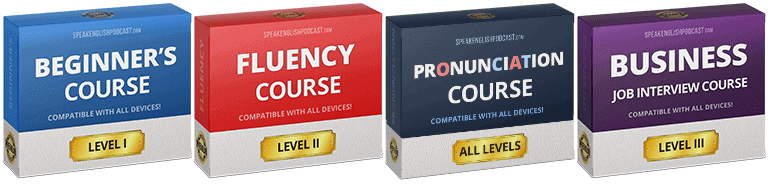
¿Quieres seguir practicando inglés? Continúa con un curso de audio completo.
GRAMMAR MADE EASY
POV Story: Grammar in Context
Read the same story in two different points of view and notice how the grammar changes naturally.
| 01 |
First version Past Tense |
The story happened in the past:
Mia was an excellent English student. She didn't learn alone, but with her friend Carol. They both studied English together. They met every Thursday afternoon at the library. They were there for five hours. They studied in silence, and 7 out of 10 times, they fell asleep. They were always sitting for too long in the same position. One day Carol had an idea. She suggested that in order not to fall asleep, they could take a walk and study at the same time. Mia thought it was an excellent idea. So, when they met again, they were carrying their books, notebooks, and pencils. However, they realized that it wasn't such a great idea after all.
One day, Mia found the Speak English Now Podcast. The podcast had a different approach. They just needed to listen to the weekly episodes.
It was so much easier for them to walk and learn English by listening to the podcast.
They were learning much faster, had a better time learning English, and lost a lot of weight.
| 02 |
Second version Conditional |
Now imagine the situation as something hypothetical.
If I wrote a story about two students, it would be Mia and Carol.
Mia would be an excellent English student. She wouldn't learn alone, but with her friend Carol. They would both study English together. They would meet every Thursday afternoon at the library. They would be there for five hours. They would study in silence, and 7 out of 10 times, they would fall asleep. They would always sit for too long in the same position. One day Carol would have an idea. She would suggest to her friend that, in order not to fall asleep, they could walk and study at the same time. Mia would think it would be a good idea. So, when they would meet, they would carry their books, notebooks and pencils. However, they would realize that it wouldn't be such a great idea after all.
One day, Mia would find the Speak English Now podcast.
The podcast would have a different approach. They would just need to listen to the weekly episodes.
It would be so much easier for the two friends to walk and learn English by listening to the podcast.
They would learn much faster, would have a better time, and lose a lot of weight.
Thanks for listening, and I’ll see you in the next episode.
Repaso
Vocabulario
Repasa las palabras y expresiones más útiles antes de volver a escuchar.
motionless
sin moverse.
visualize
formar una imagen en la mente.
lethargic
sin energía o entusiasmo.
headphones
dispositivo que se coloca sobre o dentro de los oídos para escuchar audio.
spare time
tiempo libre en el que no estás trabajando.
stroll
caminar de forma relajada.
relieve anxiety
reducir la sensación de preocupación o ansiedad.
get in shape
mejorar la condición física.
¿Quieres seguir practicando inglés? Continúa con un curso de audio completo.

0 Comentarios