
Episodio 20
Escucha el episodio
Escucha una vez para captar la idea general. Después sigue la transcripción y repite en voz alta las frases útiles.
Descarga y estudia
Recursos del episodio
Descarga un archivo o continúa con la transcripción.
Orden recomendado: escucha una vez, lee mientras escuchas y después vuelve a escuchar sin mirar el texto.
Lección completa
Lee la transcripción
Sigue el texto mientras escuchas y después repite en voz alta las frases útiles.
¡Hola! Soy Georgiana, tu profesora de inglés. Hoy vamos a trabajar formas muy comunes del inglés hablado como gonna, wanna y gotta.
Después practicaremos la gramática con una historia POV para consolidar lo aprendido.
¿Te confunde escuchar GONNA, WANNA o GOTTA? Son formas informales que aparecen constantemente en conversaciones reales.
Una contracción ocurre cuando dos palabras se reducen y se pronuncian como una sola unidad. En inglés formal ya conoces ejemplos como I am → I’m, it is → it’s, do not → don’t o will not → won’t.
En esta lección nos centraremos en contracciones más informal y colloquial. Es posible que no aparezcan mucho en los libros de gramática, pero sí las escucharás continuamente.
GONNA
Gonna es una pronunciación reducida de going to cuando hablamos rápidamente.
Evita errores como I gonna o I’m gonna to. La estructura habitual es I’m gonna + verbo.
Ejemplos: "I'm gonna go to work." / "I'm gonna eat a burger." / "She's gonna call me back."
WANNA
Wanna suele corresponder a want to. En el habla muy informal también puedes oír una pronunciación parecida cuando want a va seguido de un sustantivo.
Ejemplos con verbo: "I want to have fun." → "I wanna have fun." / "I want to eat dinner." → "I wanna eat dinner."
Ejemplos con sustantivo en habla informal: "I want a new car." → "I wanna new car."
También puede desaparecer parte de la pregunta: Do you wanna stay? puede sonar como Wanna stay? o You wanna stay?
GOTTA
Gotta es una forma informal relacionada con got to o I’ve got to, normalmente con el sentido de «tener que».
Ejemplos: "I gotta go now." / "I gotta be there in 10 minutes."
DONCHA
Doncha representa una pronunciación rápida de don’t you?
Ejemplo: "Doncha wanna come with me?"
KINDA
Kinda es la forma informal de kind of.
Ejemplos: "I kinda like her." / "What kinda music do you like?"
LEMME
Si dices let me rápidamente, muchas veces escucharás lemme.
Ejemplos: "Lemme get you a drink." / "Lemme see it!" / "Lemme go!"
DUNNO
Dunno es una forma hablada muy frecuente de don’t know.
Ejemplos: "I dunno what time it is." / "Who did it? I dunno!"
WHATCHA
Whatcha puede corresponder, según el contexto, a what are you, what do you o what you.
Ejemplos: "Whatcha gonna do?" / "Whatcha wanna do now?" / "Whatcha doing?"
'COS
En el habla informal también puedes escuchar ’cos como reducción de because.
Ejemplos: "I'm sad, 'cos my girlfriend left me." / "They canceled the trip 'cos of the snow."
Familiarizarte con estas formas te ayudará muchísimo a comprender conversaciones, canciones y películas. No necesitas utilizarlas desde el primer día; el primer objetivo es reconocerlas cuando las escuches.
Ahora pasemos a la historia POV.
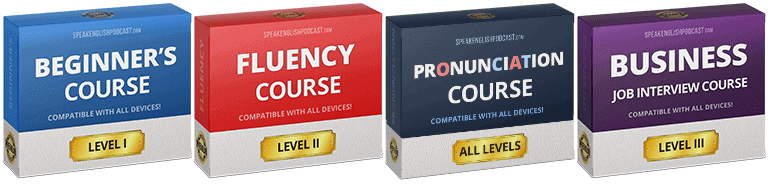
¿Quieres practicar más la expresión oral? Continúa con un curso completo de audio.
GRAMÁTICA FÁCIL
Historia POV: gramática en contexto
Lee la misma historia desde distintos puntos de vista y observa cómo cambia la gramática de forma natural.
| 01 |
Primera versión Formas completas |
Let me tell you something. I want to learn English. In fact, I'm going to study by myself. But, my friends are kind of skeptical. They ask me:
Don't you need to go to a language school?"
and I answer:
"No, let me explain. I can learn English by listening and reading".
Some of my friends don't understand it. They don't get it. They say things like:
"Oh, man, what are you going to listen to? I don't know if it's such a good idea." or "But, don't you need a teacher?".
I answer them that I kind of have a teacher. Her name's Georgiana. She's super professional, and she always wants to help.
Despite my friends' hesitations, I'm going to be motivated because I'm learning more and more. When you want to get something, you just got to fight for it. OK, I've got to go now. See ya!
| 02 |
Segunda versión Contracciones informales |
Now, the same story but with the informal contractions. Let's have some fun! Lemme tell you something. I wanna learn English. In fact, I'm gonna study by myself. But my friends are kinda skeptical. They ask me:
"Doncha need to go to a language school?"
and I answer:
"No, lemme explain. I can learn English by listening and reading".
Some of my friends don't understand it. They don't get it. They say things like:
"Oh, man, whatcha gonna listen? I dunno if it's such a good idea." or "But, doncha need a teacher?".
I answer them that I kinda have a teacher. Her name's Georgiana. She's super professional, and she always wanna help.
Despite my friends' hesitations, I gotta be motivated 'cos I'm learning more and more. When you wanna get something, you just gotta fight for it. OK, I gotta go now. See ya!
| 03 |
Tercera versión Tercera persona |
My brother says he wanna learn English. In fact, he's gonna study by himself. But his friends are kinda skeptical. They ask him:
"Doncha need to go to a language school?"
and he answers:
"No, lemme explain. I can learn English by listening and reading".
Some of his friends don't understand it. They don't get it. They say things like:
"Oh, man, whatcha gonna listen? I dunno if it's such a good idea." or "But, doncha need a teacher?"
He answers them that he kinda has a teacher. Her name's Georgiana. She's super professional, and she always wanna help.
Despite his friends' hesitations, he's gotta be motivated 'cos he's learning more and more. When you wanna get something, you just gotta fight for it. OK, I gotta go know. See ya!
This is the end of this short lesson. I really hope that you've enjoyed this story.
Gracias por escuchar. Nos vemos en el próximo episodio.
Repaso
Vocabulario
Repasa las palabras y expresiones más útiles antes de volver a escuchar.
Gonna
Una contracción informal de «going to», muy frecuente al hablar del futuro.
Wanna
Una forma informal de «want to» o «want a», según lo que venga después.
Gotta
Una forma informal de «got to» o «I've got to».
Doncha
Una forma hablada informal de «don't you».
Kinda
Una forma hablada informal de «kind of».
Lemme
Una forma hablada informal de «let me».
Dunno
Una forma hablada informal de «don't know».
Whatcha
Una forma hablada informal que puede equivaler a «what are you», «what do you» o «what you».
¿Quieres practicar más la expresión oral? Continúa con un curso completo de audio.